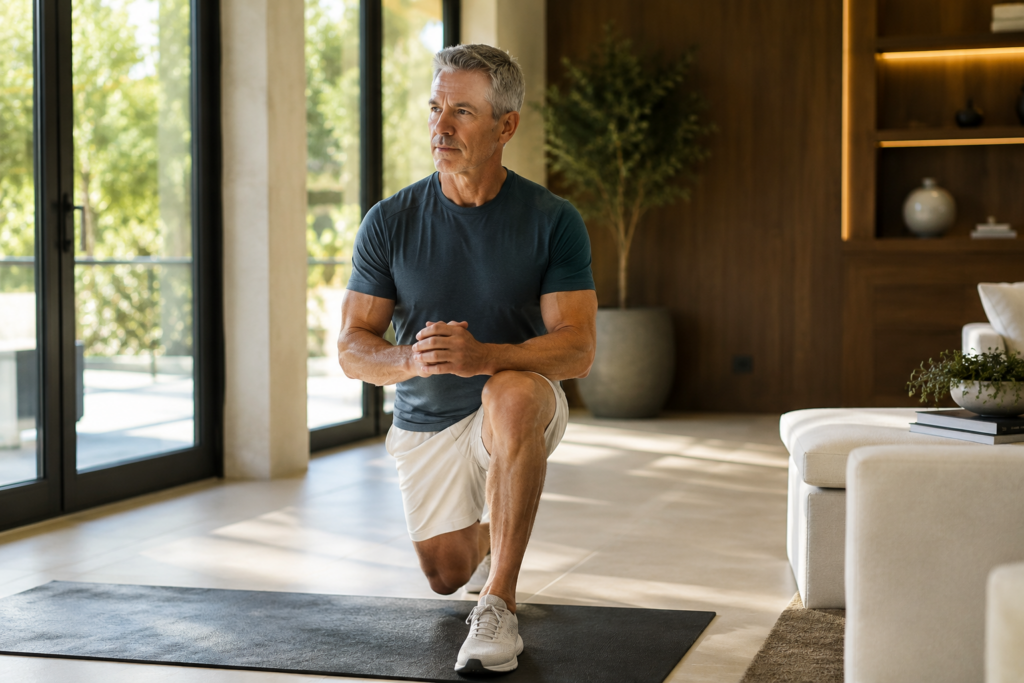
Most men expect some physical changes with age.
What surprises many men over 60 is how quickly certain abilities begin declining when they are not intentionally trained.
One year, you feel relatively capable.
A few years later:
- your balance feels less stable,
- your body feels stiffer,
- getting up off the floor is harder,
- posture changes,
- and movements that once felt automatic suddenly require more effort.
This decline is common — but much of it is not inevitable.
In many cases, the body is simply losing key physical capacities that were never intentionally maintained.
The good news is that these abilities can often improve significantly with the right training.
1. Balance and Stability
Balance is one of the first major physical abilities many men begin losing after 60.
Often, the decline happens gradually enough that it goes unnoticed at first.
You may notice:
- hesitation on stairs,
- instability on uneven ground,
- difficulty standing on one leg,
- slower reactions,
- or less confidence moving overall.
Poor balance affects far more than fall risk.
It also impacts:
- athleticism,
- coordination,
- posture,
- mobility,
- and overall movement confidence.
Related:
- “How Poor Balance Quietly Predicts Faster Aging in Men Over 60”
The encouraging part is that balance is highly trainable.
Simple but consistent work focused on:
- stability,
- coordination,
- mobility,
- and strength
can dramatically improve confidence and movement quality.
2. Mobility and Range of Motion
Many men over 60 begin feeling progressively tighter each year.
Hips stiffen. Shoulders lose mobility. Rotation decreases. Walking becomes less fluid.
Most people assume this is simply “aging.”
But often, the body is adapting to:
- reduced movement variety,
- long periods of sitting,
- decreased strength,
- and limited joint use through full ranges of motion.
This creates stiffness that stretching alone rarely solves long-term.
Related:
- “The Real Reason Men Over 55 Feel Stiff — And Why Stretching Alone Doesn’t Fix It”
Real mobility requires:
- flexibility,
- strength,
- stability,
- and controlled movement working together.
When mobility improves, many men notice:
- less pain and stiffness,
- easier movement,
- better posture,
- improved exercise performance,
- and feeling younger physically.
3. Functional Strength and Power
Strength naturally declines with age — especially if it is not trained consistently.
But after 60, men also begin losing power.
Power is what helps you:
- catch yourself,
- move quickly,
- climb stairs,
- stand up easily,
- react,
- and move with confidence.
This is one reason many men begin feeling physically “older,” even if they still walk regularly or remain somewhat active.
Related:
- “Why Walking Alone Isn’t Enough to Stay Strong and Capable After 55”
Functional strength training helps maintain:
- muscle mass,
- posture,
- coordination,
- bone health,
- movement quality,
- and long-term independence.
And importantly, this does not require extreme workouts.
Consistent, intelligent movement training is often far more effective than intensity alone.
Healthy Aging Is About Maintaining Capability
The men who age best are usually not the men trying to train like they are 25.
They are the men consistently maintaining:
- balance,
- mobility,
- strength,
- coordination,
- and physical confidence.
Because ultimately, healthy aging is not just about avoiding decline.
It’s about maintaining the ability to continue living actively and fully.
To travel. To golf. To exercise. To hike. To move confidently. To enjoy life without feeling physically limited by your body.
Want Help Improving Mobility, Balance, and Strength?
Most men expect some physical changes with age.
What surprises many men over 60 is how quickly certain abilities begin declining when they are not intentionally trained.
One year, you feel relatively capable.
A few years later:
- your balance feels less stable,
- your body feels stiffer,
- getting up off the floor is harder,
- posture changes,
- and movements that once felt automatic suddenly require more effort.
This decline is common — but much of it is not inevitable.
In many cases, the body is simply losing key physical capacities that were never intentionally maintained.
The good news is that these abilities can often improve significantly with the right training.
1. Balance and Stability
Balance is one of the first major physical abilities many men begin losing after 60.
Often, the decline happens gradually enough that it goes unnoticed at first.
You may notice:
- hesitation on stairs,
- instability on uneven ground,
- difficulty standing on one leg,
- slower reactions,
- or less confidence moving overall.
Poor balance affects far more than fall risk.
It also impacts:
- athleticism,
- coordination,
- posture,
- mobility,
- and overall movement confidence.
Related:
- “How Poor Balance Quietly Predicts Faster Aging in Men Over 60”
The encouraging part is that balance is highly trainable.
Simple but consistent work focused on:
- stability,
- coordination,
- mobility,
- and strength
can dramatically improve confidence and movement quality.
2. Mobility and Range of Motion
Many men over 60 begin feeling progressively tighter each year.
Hips stiffen. Shoulders lose mobility. Rotation decreases. Walking becomes less fluid.
Most people assume this is simply “aging.”
But often, the body is adapting to:
- reduced movement variety,
- long periods of sitting,
- decreased strength,
- and limited joint use through full ranges of motion.
This creates stiffness that stretching alone rarely solves long-term.
Related:
- “The Real Reason Men Over 55 Feel Stiff — And Why Stretching Alone Doesn’t Fix It”
Real mobility requires:
- flexibility,
- strength,
- stability,
- and controlled movement working together.
When mobility improves, many men notice:
- less pain and stiffness,
- easier movement,
- better posture,
- improved exercise performance,
- and feeling younger physically.
3. Functional Strength and Power
Strength naturally declines with age — especially if it is not trained consistently.
But after 60, men also begin losing power.
Power is what helps you:
- catch yourself,
- move quickly,
- climb stairs,
- stand up easily,
- react,
- and move with confidence.
This is one reason many men begin feeling physically “older,” even if they still walk regularly or remain somewhat active.
Related:
- “Why Walking Alone Isn’t Enough to Stay Strong and Capable After 55”
Functional strength training helps maintain:
- muscle mass,
- posture,
- coordination,
- bone health,
- movement quality,
- and long-term independence.
And importantly, this does not require extreme workouts.
Consistent, intelligent movement training is often far more effective than intensity alone.
Healthy Aging Is About Maintaining Capability
The men who age best are usually not the men trying to train like they are 25.
They are the men consistently maintaining:
- balance,
- mobility,
- strength,
- coordination,
- and physical confidence.
Because ultimately, healthy aging is not just about avoiding decline.
It’s about maintaining the ability to continue living actively and fully.
To travel. To golf. To exercise. To hike. To move confidently. To enjoy life without feeling physically limited by your body.
Want Help Improving Mobility, Balance, and Strength?
Most men expect some physical changes with age.
What surprises many men over 60 is how quickly certain abilities begin declining when they are not intentionally trained.
One year, you feel relatively capable.
A few years later:
- your balance feels less stable,
- your body feels stiffer,
- getting up off the floor is harder,
- posture changes,
- and movements that once felt automatic suddenly require more effort.
This decline is common — but much of it is not inevitable.
In many cases, the body is simply losing key physical capacities that were never intentionally maintained.
The good news is that these abilities can often improve significantly with the right training.
1. Balance and Stability
Balance is one of the first major physical abilities many men begin losing after 60.
Often, the decline happens gradually enough that it goes unnoticed at first.
You may notice:
- hesitation on stairs,
- instability on uneven ground,
- difficulty standing on one leg,
- slower reactions,
- or less confidence moving overall.
Poor balance affects far more than fall risk.
It also impacts:
- athleticism,
- coordination,
- posture,
- mobility,
- and overall movement confidence.
Related:
- “How Poor Balance Quietly Predicts Faster Aging in Men Over 60”
The encouraging part is that balance is highly trainable.
Simple but consistent work focused on:
- stability,
- coordination,
- mobility,
- and strength
can dramatically improve confidence and movement quality.
2. Mobility and Range of Motion
Many men over 60 begin feeling progressively tighter each year.
Hips stiffen. Shoulders lose mobility. Rotation decreases. Walking becomes less fluid.
Most people assume this is simply “aging.”
But often, the body is adapting to:
- reduced movement variety,
- long periods of sitting,
- decreased strength,
- and limited joint use through full ranges of motion.
This creates stiffness that stretching alone rarely solves long-term.
Related:
- “The Real Reason Men Over 55 Feel Stiff — And Why Stretching Alone Doesn’t Fix It”
Real mobility requires:
- flexibility,
- strength,
- stability,
- and controlled movement working together.
When mobility improves, many men notice:
- less pain and stiffness,
- easier movement,
- better posture,
- improved exercise performance,
- and feeling younger physically.
3. Functional Strength and Power
Strength naturally declines with age — especially if it is not trained consistently.
But after 60, men also begin losing power.
Power is what helps you:
- catch yourself,
- move quickly,
- climb stairs,
- stand up easily,
- react,
- and move with confidence.
This is one reason many men begin feeling physically “older,” even if they still walk regularly or remain somewhat active.
Related:
- “Why Walking Alone Isn’t Enough to Stay Strong and Capable After 55”
Functional strength training helps maintain:
- muscle mass,
- posture,
- coordination,
- bone health,
- movement quality,
- and long-term independence.
And importantly, this does not require extreme workouts.
Consistent, intelligent movement training is often far more effective than intensity alone.
Healthy Aging Is About Maintaining Capability
The men who age best are usually not the men trying to train like they are 25.
They are the men consistently maintaining:
- balance,
- mobility,
- strength,
- coordination,
- and physical confidence.
Because ultimately, healthy aging is not just about avoiding decline.
It’s about maintaining the ability to continue living actively and fully.
To travel. To golf. To exercise. To hike. To move confidently. To enjoy life without feeling physically limited by your body.
Want Help Improving Mobility, Balance, and Strength?
Vasanta Yoga provides personalized private movement coaching for men 55+ focused on improving mobility, balance, strength, and long-term vitality.
Sessions are designed to help men reduce stiffness, improve movement quality, build confidence, and maintain an active, capable lifestyle as they age.
About Margy Goodman
Margy Goodman is the founder of Vasanta Yoga and a Private Vitality & Longevity Specialist based in San Diego. She works with men 55+ to improve mobility, balance, strength, and long-term physical capability through personalized movement coaching.
